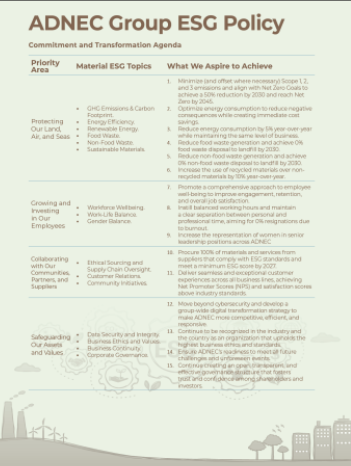
Sustainability is integral to how we operate, innovate, and serve our communities. Guided by the ADNEC Group’s Environmental, Social, and Governance (ESG) framework, we advance environmental stewardship, social responsibility, and strong governance across every aspect of our business.
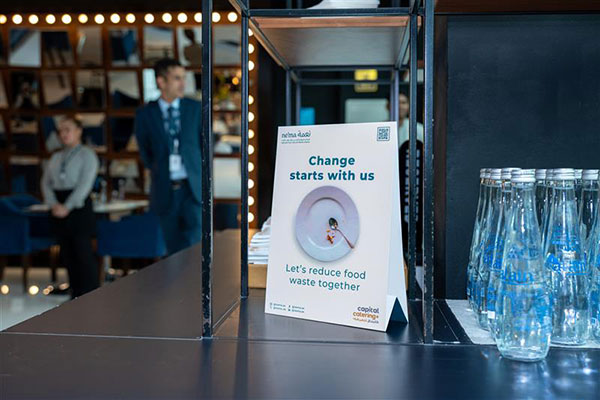
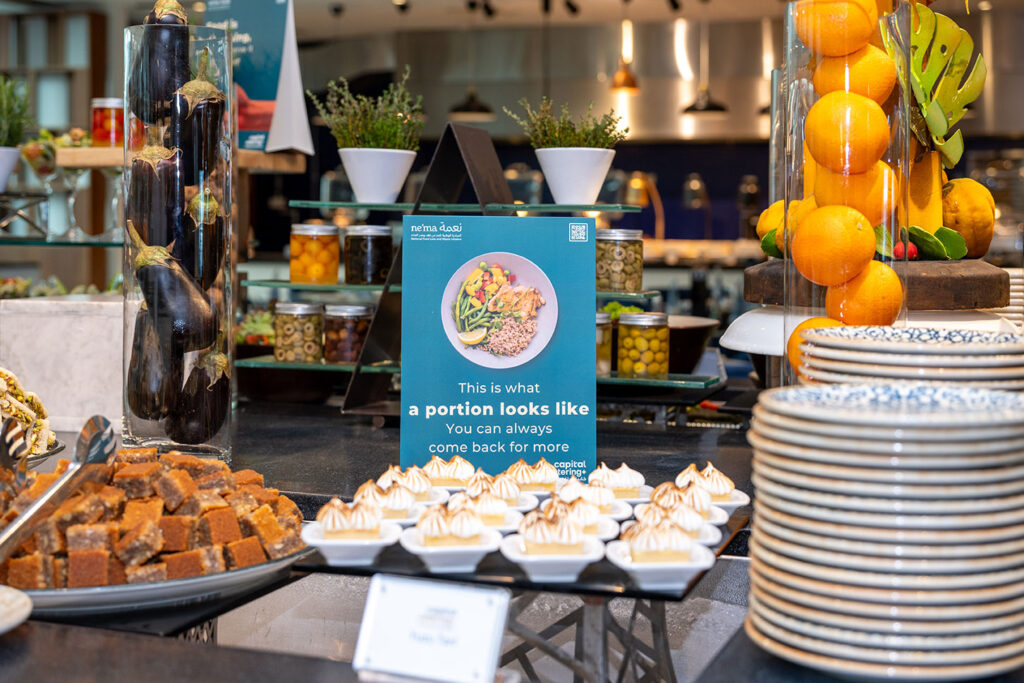
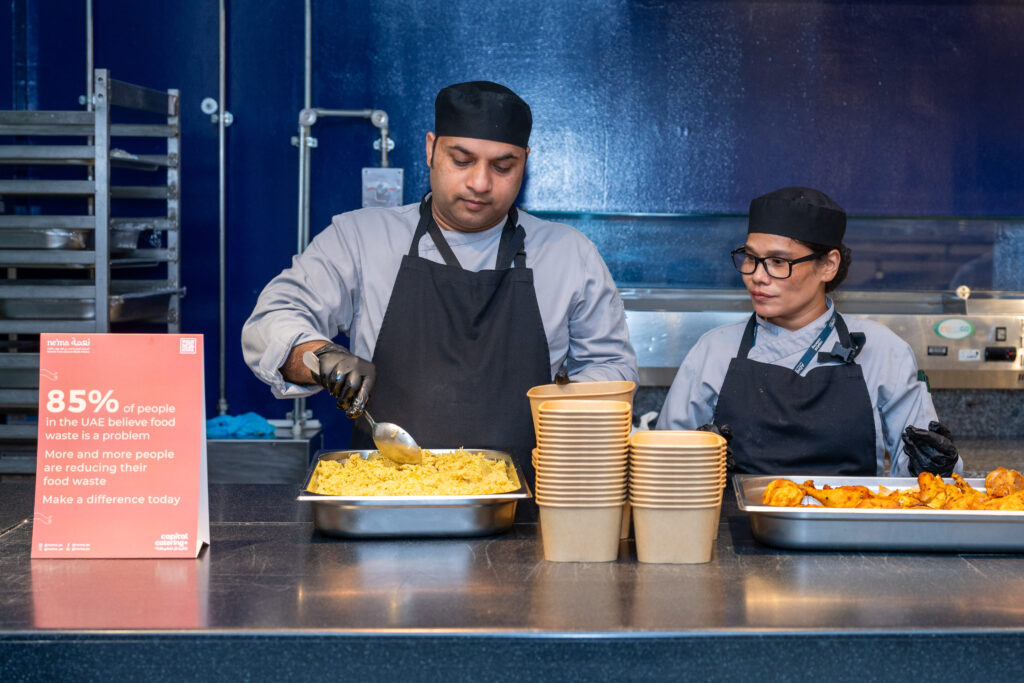
In collaboration with partners, suppliers, and regulators, including ne’ma, the National Food Loss and Waste Initiative, we lead efforts to reduce food waste, promote responsible consumption, and support community wellbeing through meal donation programmes. From large-scale solutions to pilot initiatives, we engage in a wide range of actions designed to achieve our sustainability goals and deliver measurable impact.
We also honour Emirati heritage by promoting authentic local cuisine and cultural traditions, creating lasting value for the communities we serve.
Our sustainability efforts
Our ESG approach strengthens the environment, our people, and our communities. We reduce emissions and waste, champion local sourcing and wellbeing, and uphold the highest standards of governance, accountability, and ethical practice in everything we do.
Transparency in action: our 2025 ESG report
At Capital Catering, transparency and accountability are at the heart of our sustainability strategy. We
publish our ESG performance annually through the ADNEC Group ESG Report, ensuring alignment
with global standards.
Our carbon footprint is independently measured and verified by a third party, with a 22% year-on-year reduction achieved so far.
We exceed industry standards and deliver positive impact benefits to our partners and the broader community.
Driving meaningful impact
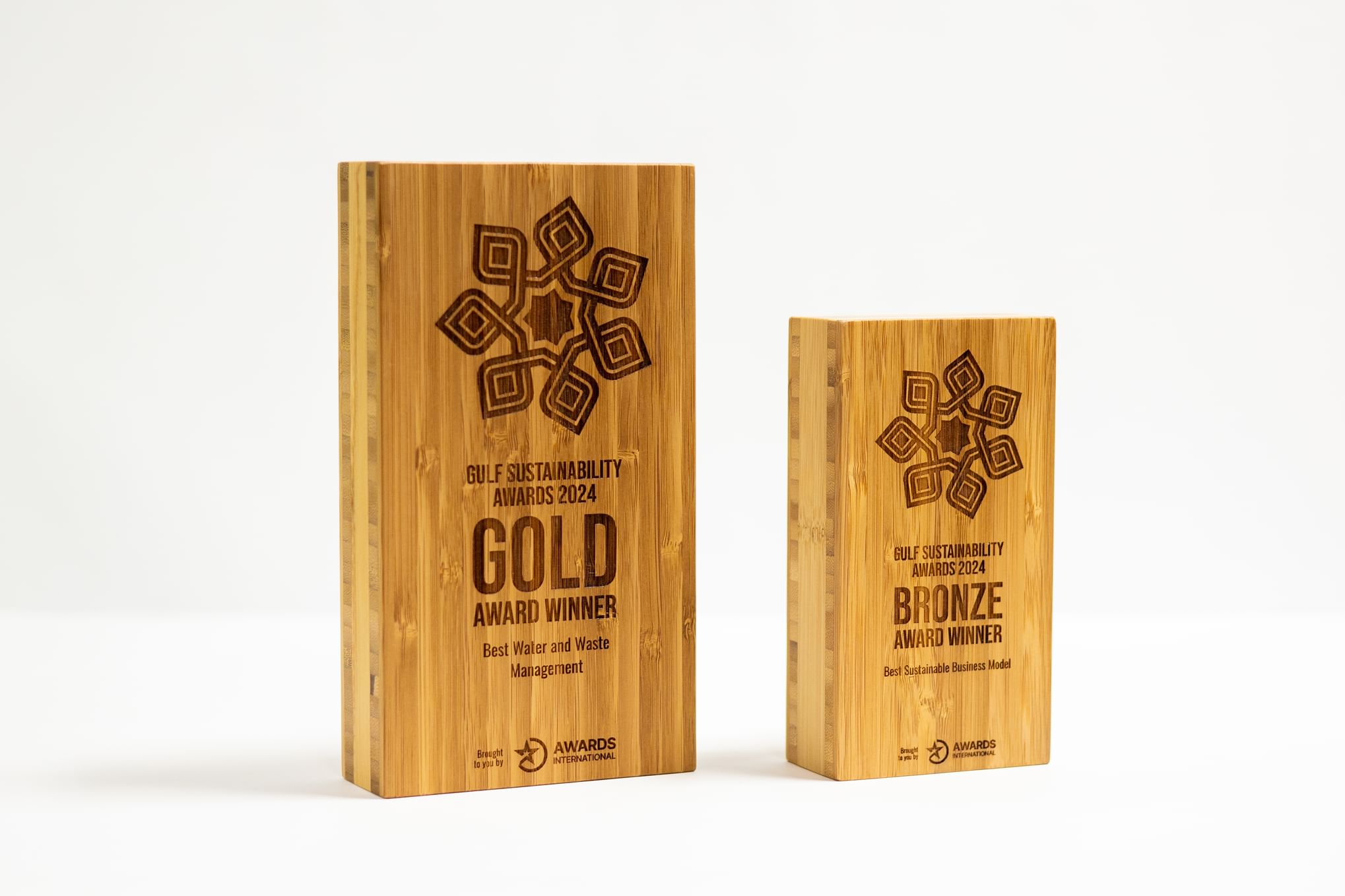
We earned global recognition of our innovative approach to ESG at the Gulf Sustainability Awards 2024. We received the Gold Award in Water and Waste for our effective food waste reduction strategies and the Bronze Award for our ‘Zero Food to Landfill’ model, which demonstrates circular economy principles.
Our environmental practices
Food waste management and recycling
Reducing food waste at the source, composting, and recycling cooking oil into biofuel.
Carbon footprint reduction
Measuring, reporting, and optimising carbon emissions with a 22% year-on-year reduction achieved so far.
Fleet emissions optimisation
Streamlining fleet management and delivery to reduce transportation-related emissions.
Plastic-free commitment
Running plastic elimination campaigns and championing the use of biodegradable options.
Tackling food waste at the source
Food waste is our top environmental focus. We are committed to achieving a 50% reduction in food waste sent to landfills by 2030. To achieve this, Capital Catering employs several strategies and technologies to tackle food waste across various client sites.
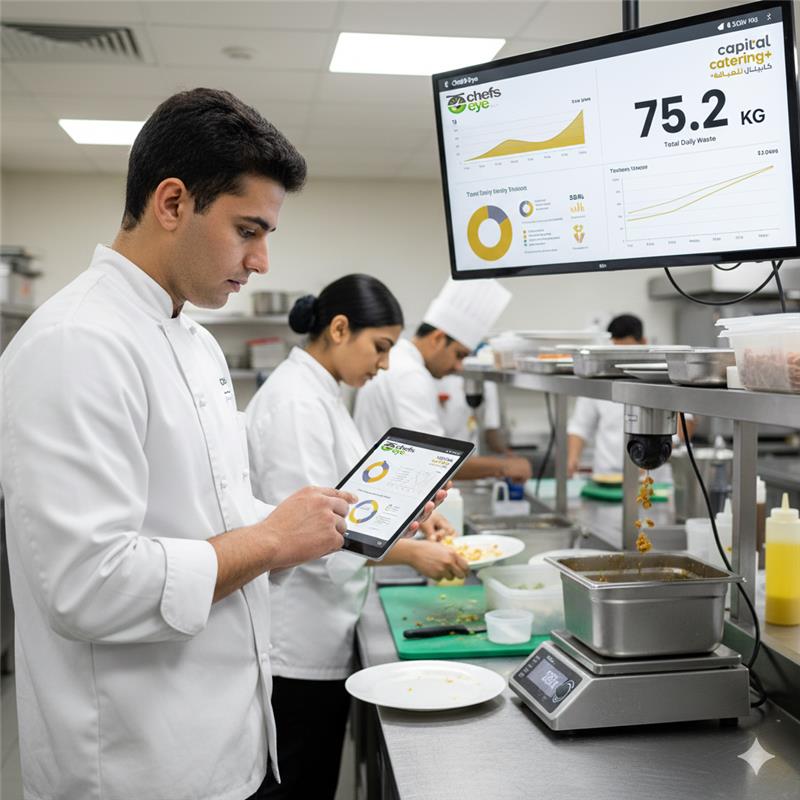
Chef’s Eye and Winnow Technology
These tools help improve menu planning by tracking, measuring, and analysing food waste data to spot trends and reduce waste.
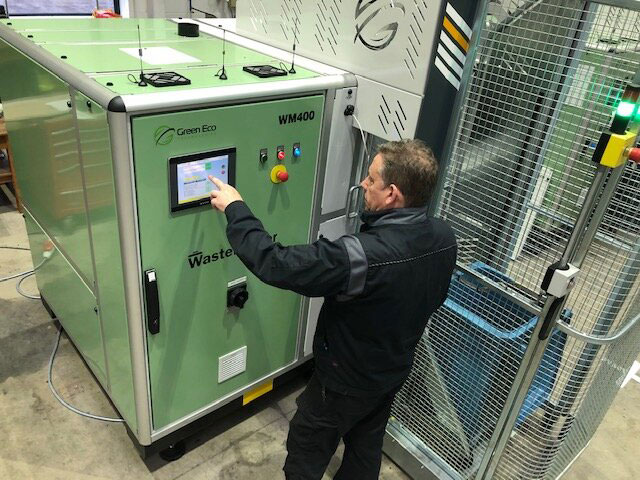
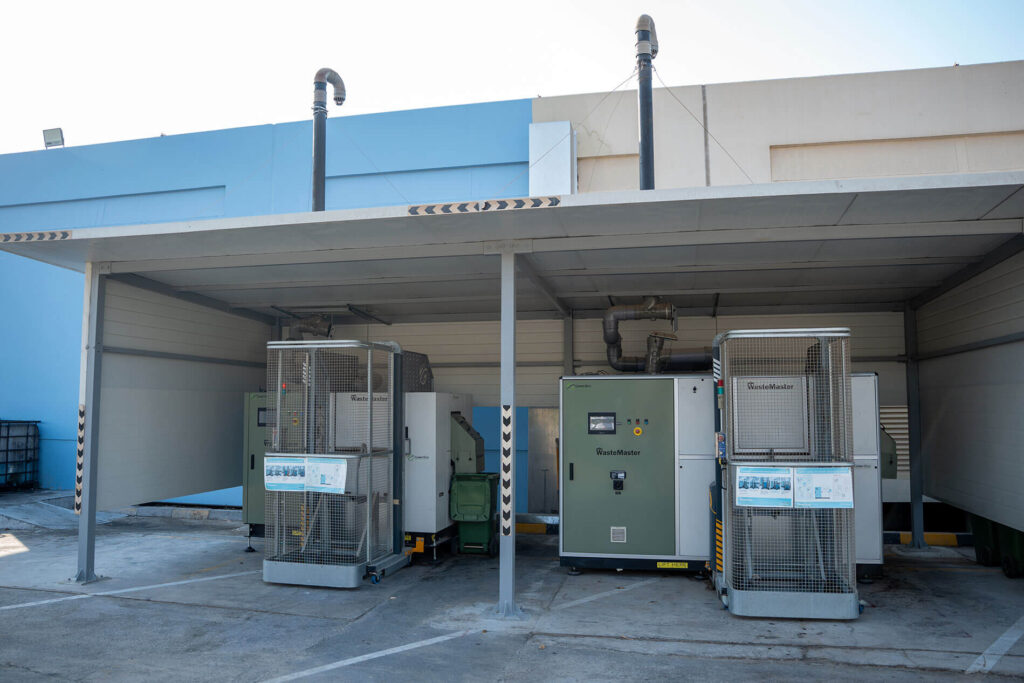
The liquid food composter and the WasteMaster
We use a range of on-site composting solutions across our operations to reduce food waste and landfill impact. At ADNEC Centre Abu Dhabi, the Liquid Food Composter and WasteMaster convert food waste into grey water and dry, odour-free material for responsible reuse.
‘Zero food waste to landfill’ initiative
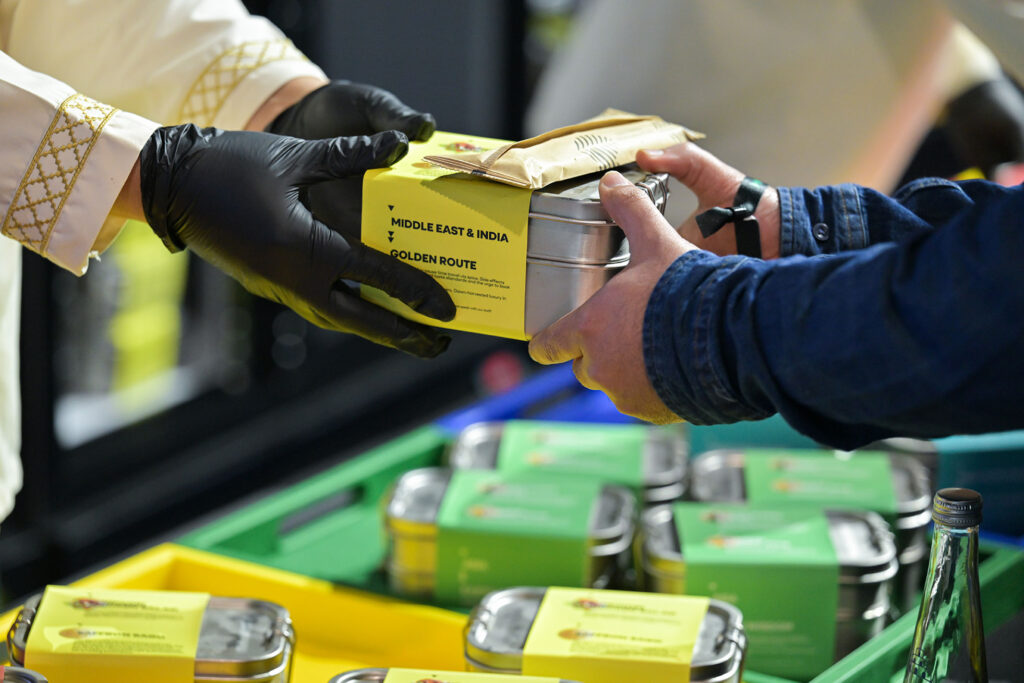
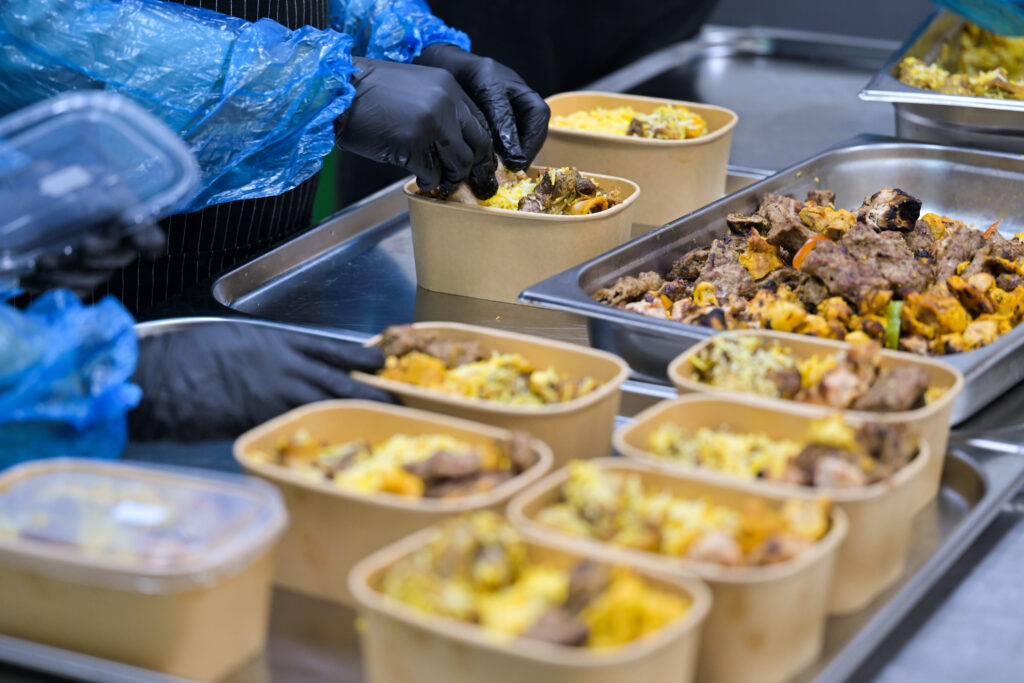
In partnership with ne’ma, the National Food Loss and Waste Initiative, Capital Catering repurposed over 4,000 kg of food, donating more than 2,000 meals to families in need and composting the remainder into nutrient-rich material.
Recyclables
Capital Catering is committed to environmental sustainability through robust recycling and food waste reduction initiatives. We run comprehensive recycling programmes across all facilities to ensure materials are properly separated and diverted from the landfill.
To cut food waste, we closely monitor inventory, apply smart portion control, and partner with local organisations to donate surplus food to those in need.
The total values of waste recycled by Capital Catering in 2024
Waste Volume (By weight) and End of Life
Waste type
Total volume (kg)
Cardboard/Carton
609,995
Empty glass bottle
172,022
Metal can
3,265
HDPE
326,115
Pressing scrap
630
Paper
500
LDPE
6,710
Aluminium scrap
410
PP tray
2,365
PET
3,155
Recyclable food waste (waste master)
14,524
Total
1,139,691
Waste type
Total volume (kg)
Waste type: Cardboard/Carton
Total volume (kg): 609,995
Waste type:
Empty glass bottle
Total volume (kg):
172,022
Waste type:
Metal can
Total volume (kg):
3,265
Waste type:
HDPE
Total volume (kg):
326,115
Waste type:
Pressing scrap
Total volume (kg):
630
Waste type:
Paper
Total volume (kg):
1,500
Waste type:
LDPE
Total volume (kg):
6,710
Waste type:
Aluminium scrap
Total volume (kg):
410
Waste type:
PP tray
Total volume (kg):
2,365
Waste type:
PET
Total volume (kg):
3,155
Waste type:
Recyclable food waste (waste master)
Total volume (kg):
14,524
Total
1,139,691
Recycling and sustainable materials
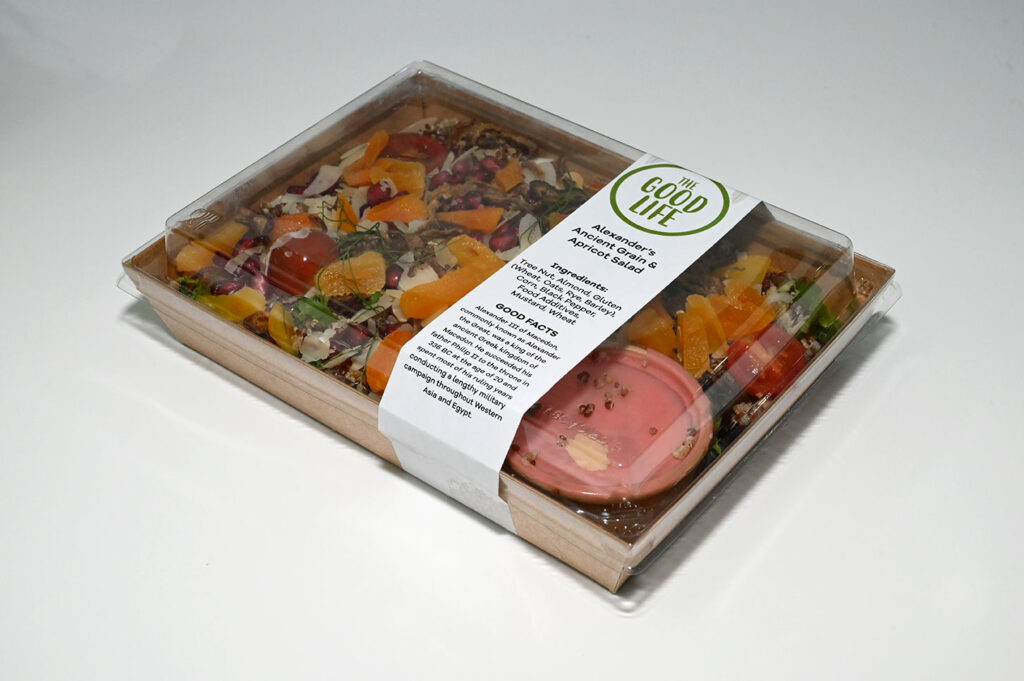
We’re reducing environmental impact through recycling, waste segregation, and the elimination of single-use plastics. Across our venues, events, and retail outlets, we’ve replaced disposable items with sustainable alternatives such as palm leaf cutlery, plant-based packaging, and reusable bottles that support a culture of refill and reuse.
Our flagship coffee shop, The Good Life, demonstrates these efforts in action, having achieved over 80% elimination of single-use plastics. Together with our clients and partners, we continue to advance towards fully circular, plastic-free operations across all sites.
Discover how we can serve your business
Have a question or request? Fill out the form and our team will get back to you within 48 hours. We look forward to assisting you.
Inquiry
"*" indicates required fields
This site is registered on wpml.org as a development site. Switch to a production site key to remove this banner.